
Testing Center
Providing professional testing services for customers.
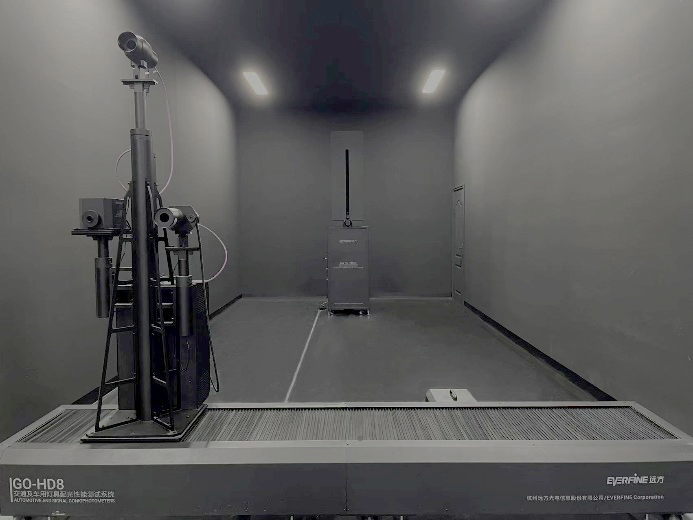
Automotive Lighting Optical Performance Testing | Photometric Distribution · Luminous Intensity · Chromaticity · One-Stop Global Regulation Verification
Automotive Headlamp Photometric Testing · Automotive Light Photometric Testing · Automotive Light Luminous Intensity...
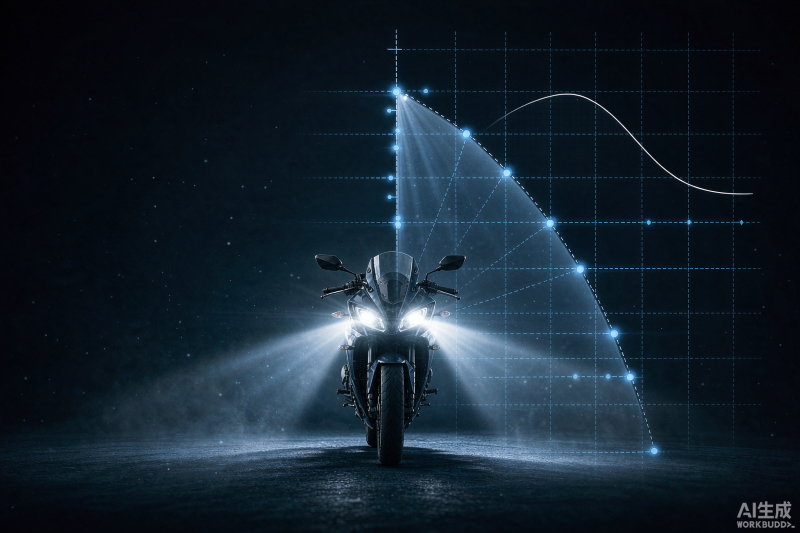
The safety code of motorcycle lighting
Optical Performance / Cut-off Line / Luminous Intensity / Glare Prevention / UNECE Certification
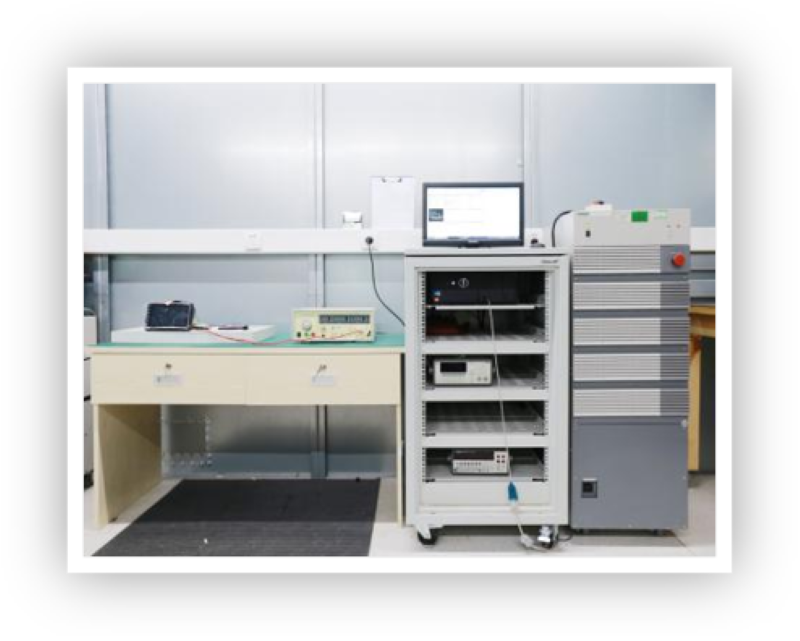
VW80000
VW 80000 testing, GB/T 28046.2, electrical performance, electrical properties, automotive electronics, automotive...
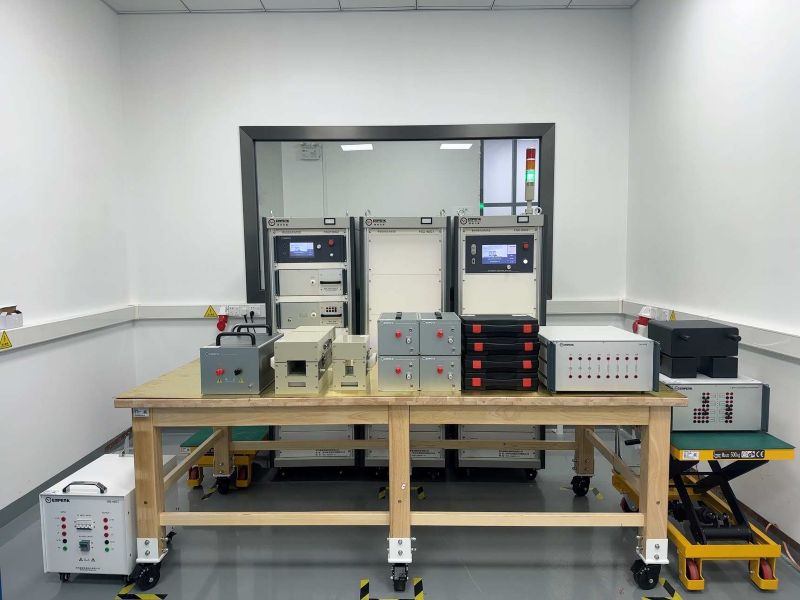
DO-160G Lightning Induced Transient Susceptibility
DO-160G Section 22 lightning induced transient susceptibility testing for avionics, UAVs, rail transit, and new energy...
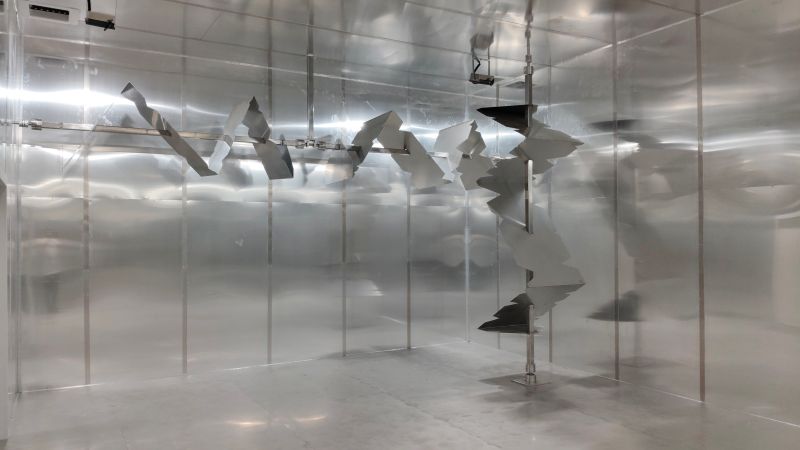
Reverberation Chamber in DO-160 Testing
Application of reverberation chamber method in DO-160G Sections 20 and 21 for radiated susceptibility and emission...
Automotive-grade comprehensive testing and compliance verification, including photometric and colorimetric regulations, in-vehicle electrical and battery compatibility, environmental tolerance, mechanical durability, material weathering resistance, functional safety, and software dimming verification.
Automotive Lighting Optical Performance Testing | Photometric Distribution · Luminous Intensity · Chromaticity · One-Stop Global Regulation Verification
Automotive Headlamp Photometric Testing · Automotive Light Photometric Testing · Automotive Light Luminous Intensity...
The safety code of motorcycle lighting
Optical Performance / Cut-off Line / Luminous Intensity / Glare Prevention / UNECE Certification
Focusing on 30–300GHz millimeter-wave technology, compiling core frequency bands for 5G FR2, automotive radar, and short-range communications; interpreting industry standards from 3GPP, ITU-R, and ETSI; and outlining global radio equipment certifications, RF regulations, and electromagnetic exposure requirements to provide a global compliance reference for millimeter-wave terminals, modules, and radar products.
暂无内容
VW 80000 is a corporate standard of Volkswagen AG. Its full name is typically \"Electrical and Electronic Units in Motor Vehicles up to 3.5 t — General Requirements, Test Conditions, and Tests\", which refers to electrical, electronic, and electromechanical components for motor vehicles up to 3.5 t gross vehicle weight: general requirements, test conditions, and test methods.
RTCA DO-160 is developed by RTCA SC-135 of the United States. It defines 26 chapters of tests and classification categories for airborne equipment, including temperature, altitude, damp heat, sand and dust, salt spray, icing, vibration, shock, power supply anomalies, RF immunity/emissions, direct/indirect lightning effects, ESD, fire protection, etc. DO-160 is widely referenced by FAA AC 21-16, EASA, and TSO/TC/STC data packages. It serves as the core environmental qualification basis for avionics and electrical equipment to obtain installation certification, and is used to demonstrate that the equipment is safe, reliable, and does not interfere with other airborne systems in the real flight environment.
Bluetooth, Wi-Fi, Zigbee, Thread, Ultra-Wideband (UWB), Near Field Communication (NFC), Digital Mobile Radio (DMR), analog FM walkie-talkie, Long Range Wide Area Network (LoRa), Z-Wave, Wi-Fi HaLow, Visible Light Communication (Li-Fi), and other short-range wireless communication technologies
暂无内容
2G: Digital narrowband technology, 3G: Wideband CDMA technology, 4G: All-IP broadband technology, 5G: New Radio (NR) technology, Satellite communication: Non-Terrestrial Network (NTN), Microwave communication: High-frequency line-of-sight transmission, Optical fiber communication: Optical waveguide transmission, FWA: Fixed Wireless Access, NB-IoT / LTE-M: Cellular IoT, 6G: Terahertz and sensing convergence
暂无内容
Wi-Fi 7 (IEEE 802.11be), building upon tri-band coordination across 2.4/5/6 GHz, introduces 320 MHz ultra-wide channels, 4096-QAM, Multi-Link Operation (MLO) for concurrent multi-link transmission, Multi-RU and punctured transmission, enhanced MU-MIMO/OFDMA, and low-latency scheduling. It is designed for esports and cloud gaming, 8K streaming, AR/VR, high-density enterprise access, industrial wireless, and whole-home Mesh scenarios.
暂无内容
The fundamental reason for the existence of a reverberation chamber (RC) is to solve the testing challenge of "electromagnetic waves incident from arbitrary directions, with arbitrary polarization, and arbitrary phase" using statistical methods. It excites a large number of resonant modes within a metal-shielded cavity, and then changes the boundary conditions via mechanical stirrers (or frequency stirring), causing the electric field direction, polarization, and phase inside the chamber to traverse random states in a statistical sense. Consequently, the equipment under test (EUT) only needs to be placed fixedly and can "see" various incident conditions during a single stirring process, replacing the time-consuming mechanical turntable/antenna scanning in a semi-anechoic chamber (SAC). The typical EMC operating frequency band is 80 MHz–18 GHz, while millimeter-wave reverberation chambers have been extended to 24–140 GHz; the cavity quality factor Q is often on the order of 10⁴–10⁵. Its core value lies in: achieving high field strength (radiated susceptibility RS) with a lower-power amplifier, obtaining statistically worst-case scenarios with a fixed setup, significantly saving on anechoic chamber absorbing materials and scanning time, and enabling measurements of shielding effectiveness (SE), total radiated power (TRP), antenna efficiency, material reflectivity/absorption, HIRF, and MIMO OTA.